

Hi there! This content comes from my free monthly newsletter, which was originally sent to subscribers in March 2025. If you haven't already, why not sign up for the newsletter yourself?
Empower Your Healthcare
In this issue:
- Maintenance for the Health of It
- How Often Should I Come for Treatment?
- Practitioner Spotlight: Matt Sedo
- Closing Reflection
Maintenance for the Health of It
I am regularly asked “How often should I be coming for a treatment?” or, framed slightly differently “When should I come back for a follow up?”
This month I would like to address this question! In our 7th issue of the newsletter, we’ll be talking about maintenance and regularity, specifically as it applies to receiving treatment.
Let’s get started!
“Healing comes from within; it is the result of a harmonious balance between body, mind, and spirit.”
– Author Unknown

How Often Should I Come For Treatment?
In my ideal world receiving regular bodywork treatments would just be normal. Ideally, everybody would be “culturally” comfortable with going for regular Zen Shiatsu treatments or booking regular acupuncture.
In this ideal place, from a young age we would be used to healthy touch. And when specific concerns did arise, our first consideration would be “would needles, bodywork or even herbal treatment help me out here?”
Alas, we’re not quite there yet.
While the world has changed a lot since I started my practice over 25 years ago, and the idea of receiving regular treatment is more prevalent, I think it is still important to drive this conversation forward in order to encourage you to empower your own healthcare.
Figuring out where you’re at
Empowering your own healthcare is a theme of our times. I have found that if you understand “where” you are in terms of your health, it is easier to establish goals and regular maintenance follows suit.
Many people have found the concept of the Three Zones of Pain to be a helpful framework for determining where they would place themselves in context of their health.
This framework uses a coloured pain scale that categorizes pain and stress into three zones: Green, Orange, and Red, each corresponding to a numerical range from 1 to 10. The Green zone indicates minimal pain and stress, the Orange zone represents moderate pain, and the Red zone signifies severe pain.
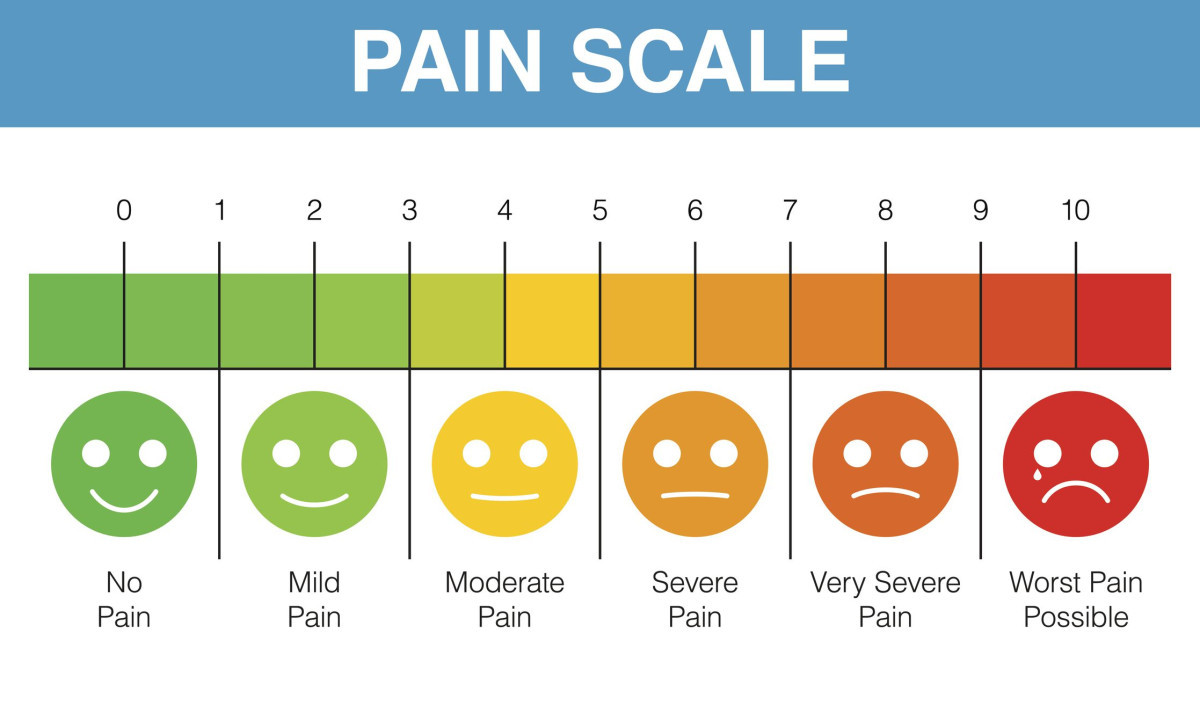
When do you come for treatment?
Broadly speaking I have two types of patients:
Patient 1 calls me when they are in a crisis. Either there has been an acute and sudden event that has caused turmoil or there is a flare up of an old, recurrent, and persistent condition.
These are considered Red Zone events. They are severe and require immediate attention. You should not hesitate to call me!*
*Note: I am NOT saying don’t seek out the help and advice of your Allopathic practitioner (MD). I am suggesting that it is good to consider using other interventions that may be helpful.
Your alternative practitioner (that would be me) should be able to give you an honest assessment of their ability to help, or if it would be more appropriate for you to speak with your MD.
Patient 2 books treatments on a regular schedule. This may be weekly, every two weeks, or once a month. These people are either looking to regain and/or maintain a certain level of vitality and health through regularly soothing their body-minds, or they are looking to reduce the effects of long term, chronic conditions. These are Orange Zone to Green Zone patients.
What kind of patient are you?
Now, if you’re like Patient 2, you already understand the theme of this newsletter:
Scheduling of regular treatments at a consistent frequency allows you to maintain a certain level of harmony within your body and mind.
We regularly address your concerns, easing nervous tension and muscular strain. This in turn leads to an overall generation of vitality within you. The excess strain and pain you have starts to alleviate, your system starts to recover, and you build vitality and strength as opposed to constantly trying to regulate and deal with stress and pain by itself.
Patient 1 has a harder time with this.
This patient is generally blessed with a very strong constitution, which sounds great. But really it means they have become accustomed to “driving through” pain and stress in order to keep going.
In the short term this may work out. But in the longer term it can lead to an accumulation of a stress and tension load which eventually becomes more than your body (or mind) can sustain.
When the strain becomes too much, this patient finds themselves in a Red Zone Crisis and gives me a call. It usually takes 2–3 treatments to reduce this situation (and at least bring them back into the Orange Zone).
It’s at this stage I hear, “So how often should I come for treatments?”
Okay T’agyol, so how often should I be coming for treatments?
If you were in the Red Zone, after about 3 treatments you should be more clearly in the Orange Zone. From here we start to look at maintenance and regularity.
Initially, establishing a regular treatment schedule consolidates the work we have done in bringing you out of the Red Zone. That way we can maintain you in the Orange Zone and work towards not only dealing with health crises, but actually starting to pro-actively generate internal vigour and health.
This is the turning point to establish a Green Zone level of vitality: we are now maintaining your health as opposed to responding to crises.
In the Green Zone, it is preferable for us to set up a regular schedule to work together. This may be once a week, once every 2 weeks, once per month, or even every 6 weeks.
This is so much better than than erratically seeing each other for 3 weeks in a row and then not again for another 4 months! The results are simply not the same.
In the same way as eating or sleeping or exercising on a regular schedule, your body-mind responds more effectively when you “know” that treatments are being supplied at regular intervals.
Regularity at this point becomes a matter of what you are able to do in terms of your lifestyle. It does not mean frequency.
Regularity means sustainable, regularly-scheduled maintenance to keep your system smooth and unstressed. In this state, you have vitality and energy to respond to crisis if it occurs but are not constantly living your life in crisis. Sounds good to me!
“In seeking health, there is a great deal more to be done than to simply suppress disease.”
– Author Unknown

Practitioner Spotlight: Matt Sedo
Before we wrap up this issue, I would like to highlight the work of my friend and colleague, Matt Sedo.
The idea here is to give you options to explore for treatment – especially if you are in acute need and I am not available!
Matt is a Shiatsu and Tui Na Practitioner and Acupuncturist who has been in practice for as long as I have. I have great respect for his work and he is a practitioner of the highest calibre and integrity.
His main field of treatment is in musculoskeletal and stress-related disorders. And while his foundation for treatment is Traditional Chinese Medicine, he is well versed in modern understandings of neuroanatomy and the “science of pain”.
I particularly admire Matt’s innovation and creativity when it comes to finding solutions for his patient's complex problems, blending traditional and modern understandings and approaches to bodywork-therapy.
Please try his services. And when you see him, tell him I say “hello!”

Closing Reflection
As I conclude this issue, remember that just like tending to a garden, maintaining your health requires consistent attention and care.
As a gardener, if you do not do anything, the garden can become overrun by a single invasive species and cannot thrive as a diverse ecosystem.
Our body-mind-spirit system is no different. Going for regular, maintenance treatments is the equivalent of a weekly raking of the leaves, mowing of the grass, trimming of branches, or applying mulch (eating, sleeping, exercise, meditation and other self-care practices are akin to daily watering and weeding).
As always, I hope this newsletter has been insightful for you. My intention is to show you that you are able to “wrangle” your own health and cultivate it in the same way a gardener can “wrangle” their garden and transform it into a thriving ecosystem through regular maintenance.
Quite a hopeful metaphor as we sit here in the depths of Snowy March!
Share This Newsletter – I hope you have enjoyed this issue of my newsletter. If you know someone who might also benefit from this content, please forward it along or ask them to sign up at my website.

About Daniel
I am a practitioner of traditional East Asian medicine based in Toronto, Ontario. You can find more about me on my bio or learn more about the treatments I offer.
As always, thanks for reading!
– Daniel (T’agyol) Adler