

Hi there! This content comes from my free monthly newsletter, which was originally sent to subscribers in June 2026. If you haven't already, why not sign up for the newsletter yourself?
Meeting You Where You Are
In this issue:
- What Kind of Treatment Do You Need Today?
- Two Paths Through Shiatsu
- Choosing the Treatment Experience That Suits You
- Where Chanting and Sound Fit In
- Closing Reflection
What Kind of Treatment Do You Need Today?
I’ve been thinking a great deal lately about what people expect when they come to see me for Zen Shiatsu.
Broadly speaking, my patients tend to arrive with one of two kinds of needs.
Some come because something hurts. They have hip pain, a stiff neck, an injured shoulder, recurring back discomfort, a joint that does not move as comfortably as it should, or a body that simply needs some good maintenance.
Others come for something a little more difficult to name. They may be exhausted, overwhelmed, anxious, grieving, moving through a life transition, or feeling as though their body and mind have become disconnected from one another. They may not need me to “fix” a specific shoulder or hip. They need a calm and connected place to settle.
Both are valid reasons to come for treatment.
Both are well within the work that I do.
But they are not necessarily the same treatment experience.
After 26 years of practice, I have come to recognize that one of the most important parts of working well together is knowing what kind of support you are actually looking for when you arrive.
This month, I would like to clarify the two different — and often overlapping — paths through my Shiatsu work.
“The right treatment begins by listening carefully to what is being asked.”
– Reflection from practice

Two Paths Through Shiatsu
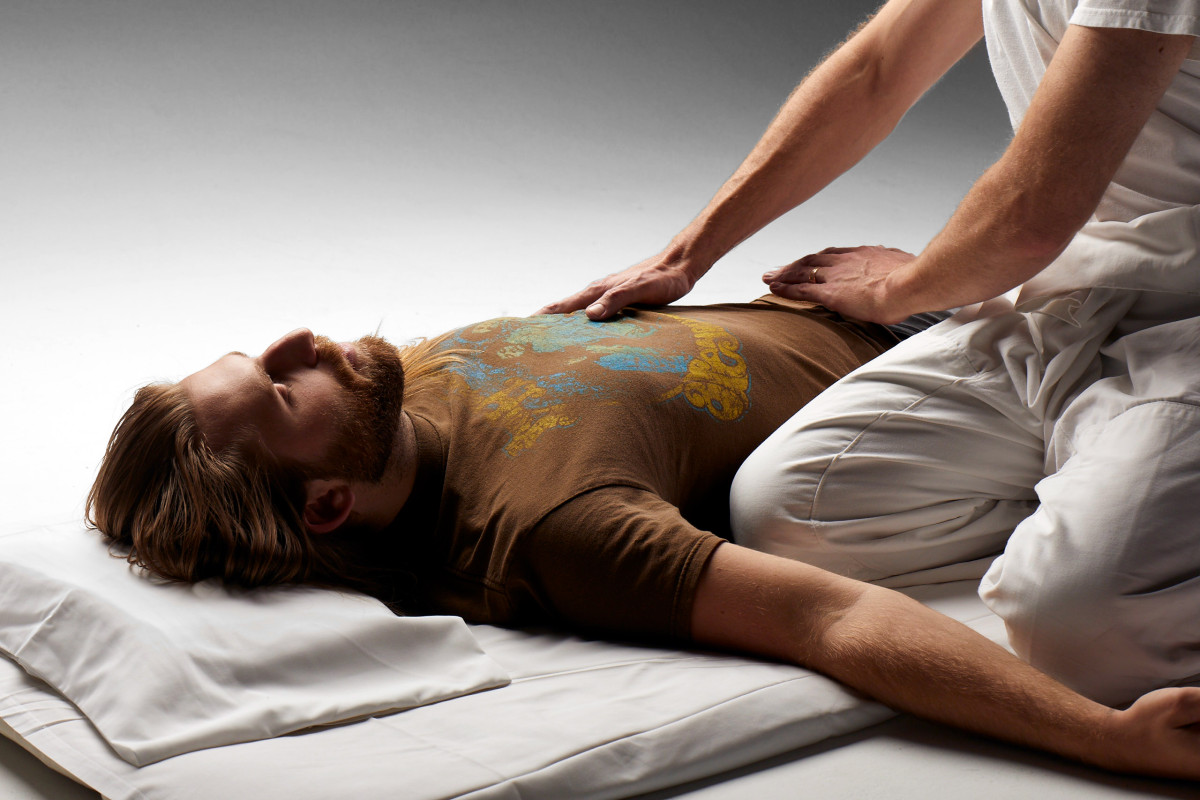
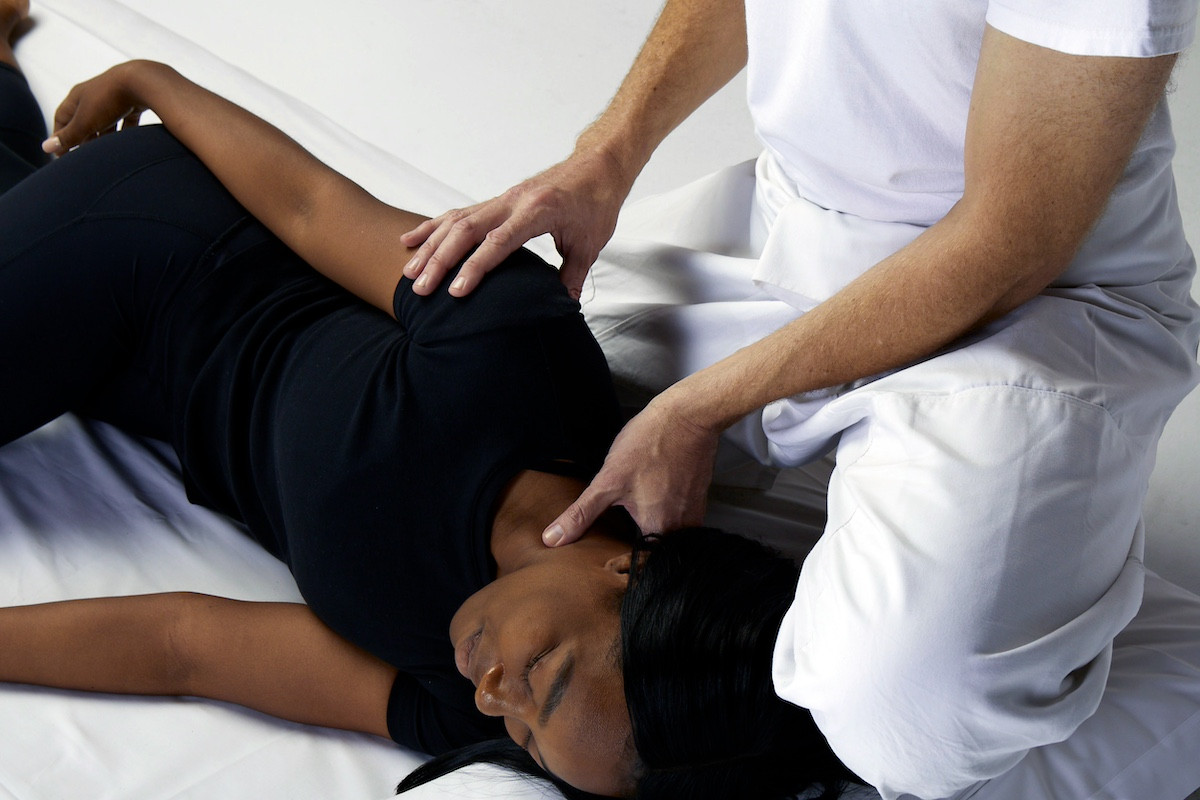
Shiatsu is a hands-on treatment based on pressure, stretching, gentle joint movement, and an understanding of the whole body through the lens of Traditional East Asian Medicine.
For some people, this whole-body approach is particularly useful because a painful shoulder, stiff hip or aching back rarely exists in total isolation. Your movement, tension, posture, breathing, sleep, stress and energy all affect how your body experiences discomfort.
At the same time, Shiatsu is not only a treatment for pain or injury.
The same attentive touch, pressure, rhythm and stillness that may help ease a painful body can also help a person feel safer, quieter, calmer and more settled within themselves.
That is one of the beautiful things about this work. The treatment can be focused and physical. It can also be quiet, reflective and deeply restorative.
And, quite often, it can include a little of both.
The important thing is that we understand what you need from the session, so the treatment feels appropriate, comfortable and supportive for you.
Path 1: Zen Shiatsu for Structural Relief and Physical Maintenance
Many people come to see me with clear physical concerns:
muscular pain or tension
joint stiffness or restriction
neck, shoulder, back or hip discomfort
injury rehabilitation
recurring structural problems
physical maintenance between flare-ups
the accumulated strain of work, exercise or daily life
I am very comfortable working with these kinds of concerns. My approach is holistic in the sense that I do not treat your sore shoulder as though it has nothing to do with the rest of you. However, that does not mean the treatment lacks focus!
If you come in because your neck is stiff, your knee is troubling you or your lower back is making it hard to move comfortably, we can work in a clear and practical way with that concern.
A structurally focused Shiatsu treatment may include:
sustained pressure into tight or painful tissues
stretching and opening restricted areas
gentle joint mobilizations
working along related pathways in the body
encouraging circulation through areas that feel tense, blocked or uncomfortable
helping you return to easier, more confident movement
From a Traditional East Asian Medicine perspective, pain and stiffness may be understood as a kind of stagnation — a place where Qi and Blood are not moving as smoothly as they should. In everyday terms, this may feel like tightness, limited movement, aching, heaviness, tenderness or the frustrating sense that something simply will not let go.
For musculoskeletal concerns, the treatment intention is usually quite direct:
Reduce discomfort. Improve movement. Help the body recover and function more comfortably.
Sometimes this work creates noticeable relief in a relatively short course of treatment. Sometimes an older or more complex issue requires more regular care and maintenance.
Either way, if you are coming for a physical problem, it is perfectly reasonable to want a focused, practical treatment for that problem.
Path 2: Restoration, Grounding and Reconnection
There is another kind of treatment request that I am seeing and understanding more clearly with time. Sometimes you are not coming because of a single painful joint or injured muscle.
Sometimes life itself has become a lot.
You may be navigating:
- grief or loss
- burnout and exhaustion
- family changes
- work uncertainty
- illness in yourself or someone close to you
- children leaving home
- a major decision
- a period of emotional upheaval
- the simple but very real feeling that you are no longer quite settled in yourself
In these moments, a person may still carry physical tension (often quite a lot of it), but the central need is different.
You may not be looking primarily for someone to correct a mechanical problem. You may need a place where you can slow down, breathe, feel supported, and allow your body to settle beneath the constant movement of your thoughts.
I use the word spiritual cautiously when speaking about this part of my work. I do not mean religious. I do not mean mystical. And I am not a psychologist or psychotherapist.
What I mean is that there are times in life when our difficulties are not contained within one muscle, joint or diagnosis. They affect our sense of self, our emotions, our nervous system, our ability to rest, and the way we inhabit our bodies.
In these circumstances, Shiatsu can offer a quiet, embodied form of support.
Through attentive touch, steady pressure, stillness and the creation of a calm therapeutic space, the treatment can help you move from a state of overload and busyness toward a greater feeling of grounding and connection.
It is less about “fixing” you.
It is more about creating the conditions where you can begin to settle, restore and reconnect with yourself.
This kind of treatment may unfold more gradually than treatment for a specific painful area. It often becomes part of an ongoing process of support during a difficult, important or changing period of life.
And sometimes, that is exactly the “medicine” that is needed.
Choosing the Treatment Experience That Suits You
These two paths through Shiatsu are not opposites. They overlap.
A patient coming for back pain may also leave feeling calmer and more grounded. A patient moving through grief or burnout may also need relief from the very physical tension they are carrying in their jaw, neck, chest or shoulders.
You do not need to have all of this figured out before you book.
That is part of what our conversation at the beginning of treatment is for.
You can simply tell me what is happening, what you are hoping for, and whether there is anything you would particularly welcome — or prefer not to include — in your session.
From there, we can choose a treatment path together.
“When the body settles, the heart has room to speak.”
– Traditional healing reflection

Where Chanting and Sound Fit In
Some of you will know that I occasionally incorporate quiet chanting and sound-vibrational work into treatments.
For patients who already come seeking deep relaxation, nervous system regulation or a more reflective treatment experience, this often feels like a natural part of the session.
For others — particularly those referred to me for a shoulder injury, hip pain or another musculoskeletal issue — it can be unexpected.
That is completely understandable!
If you arrive expecting a focused physical treatment and I begin discussing chanting or sound, you may (reasonably) wonder what that has to do with your sore knee.
The simplest answer is that sound is one of the therapeutic tools I may use, just as pressure, stretching, joint movement and stillness are tools I use. During a quieter, restorative treatment, chanting or sound may help create a steady rhythm and atmosphere that supports relaxation and allows the mind to become less busy.
For some people, this is deeply helpful. For others, it may not be what they are looking for that day.
That matters.
I do not believe treatment should be something that is simply done to you without conversation or understanding. Your comfort, your expectations and your reasons for coming are important parts of the work.
If you would prefer a focused structural treatment without chanting, please say so. If you are curious about a quieter, more integrative session that includes sound, we can discuss that too.
There is no correct preference. There is only the treatment experience that best supports you at that particular moment.
Closing Reflection
Sometimes clarity in healthcare begins with a very simple question:
What kind of support do I need right now?
Perhaps you need help with a painful shoulder, an aching back or a hip that is stopping you from moving freely. Perhaps you need a place to breathe after a difficult season of life. Perhaps, like many people, you need some combination of the two.
There is no wrong answer.
Your body, mind and heart do not exist separately from one another. What hurts physically can affect how you feel emotionally. What weighs on you emotionally can make itself known through tension, fatigue and pain.
My intention is not to put you into one category or another. It is to meet you where you are, listen carefully to what you need, and offer a treatment that feels clear, respectful and genuinely supportive.
So before your next session, consider taking a quiet moment to ask yourself:
Am I coming for relief, restoration, or a little of both?
Whatever the answer, we can begin there.
Stay golden,
Share This Newsletter – I hope you have enjoyed this issue of my newsletter. If you know someone who might also benefit from this content, please forward it along or ask them to sign up at my website.

About Daniel
I am a practitioner of traditional East Asian medicine based in Toronto, Ontario. You can find more about me on my bio or learn more about the treatments I offer.
As always, thanks for reading!
– Daniel (T’agyol) Adler